Chromosome-Level Reference Genome of the Siamese Fighting Fish
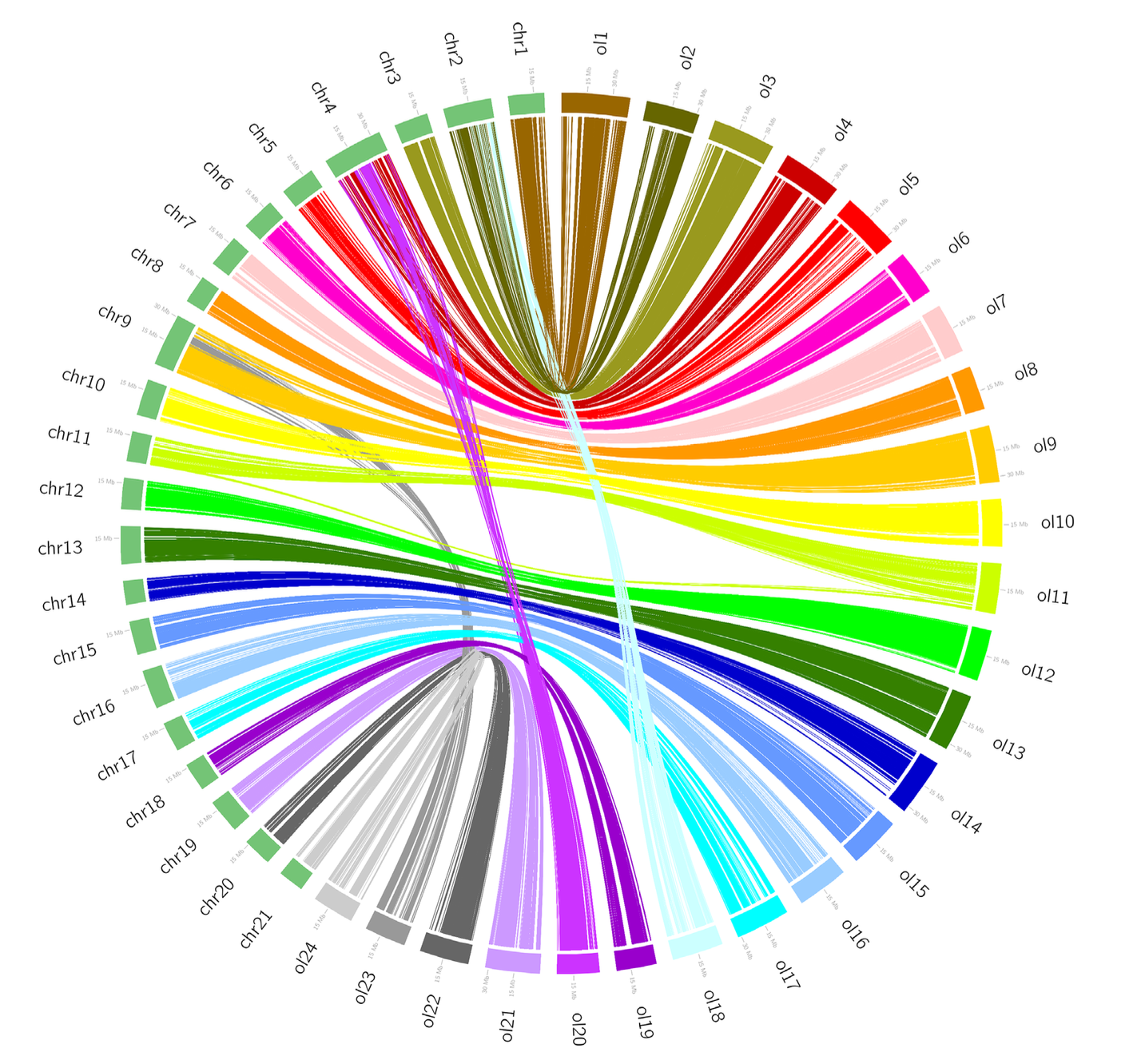
The Siamese fighting fish (Betta splendens) is well known for its highly aggressive behavior, making it a valuable model species for studying the genetic basis of aggression and behavioral traits in teleost fish. However, the absence of a high-quality reference genome has previously hindered deeper genetic and evolutionary studies. In our latest publication, released in GigaScience, we present the first chromosome-level genome assembly of B. splendens, providing essential genomic resources for comparative research and behavioral genetics.
Key Findings
- High-Quality Genome Assembly:
- The assembled genome spans 465.24 Mb, with N50 scaffold size of 949.03 Kb.
- Using Hi-C sequencing, we successfully anchored 93% of the assembled sequences onto 21 chromosomes, offering a more complete and structured genome reference.
- Comparative Genomics and Chromosome Conservation:
- Chromosomal mapping between B. splendens and Oryzias latipes revealed strong chromosome conservation, alongside rearrangement events in three chromosomes.
- We annotated 23,981 protein-coding genes, supported by RNA sequencing data from multiple tissues (brain, liver, muscle, heart).
- Genetic Basis of Aggression:
- Whole-genome resequencing of five different B. splendens varieties allowed us to detect 3.4 million single-nucleotide variations (SNVs) and 27,305 insertions/deletions (indels).
- Gene family expansions in NLRP3 (inflammation response), TRIM47 (stress regulation), and AVPR2 (vasopressin receptor) were identified, potentially contributing to aggression-related behaviors.
Reflections
This study was conducted in collaboration with Professor Simon Lee’s team at the University of Macau, as part of our broader genomic research initiatives. Our team led the sequencing and data analysis efforts, leveraging high-throughput genomic technologies to establish a foundational reference for behavioral genetics in teleost fish. This project serves as an important step toward exploring genomic mechanisms underlying aggression, providing valuable data for comparative genomics and evolutionary studies.
The full text of this study can be accessed online at GigaScience.