 Research directions of XinLab.
Guided by a clear overarching vision, XinLab has outlined a structured plan for its research directions. In the realm of technological innovation, the lab focuses on advancing methodological approaches within the expansive field of genomics. Building on foundational genomics technologies such as high-throughput sequencing, single-cell sequencing, and spatial transcriptomics, XinLab aims to generate more refined omics data. For instance, the lab has enhanced BGI’s single-cell technology (DNBelab C4) and pioneered a novel method called mtscATAC-seq. This innovation allows for simultaneous mitochondrial genome sequencing and chromatin accessibility analysis within individual cells. The principle and performance of this method have undergone preliminary validation (see more details in mtscATAC-seq). Looking ahead, this technology holds promise for addressing key scientific questions such as those related to aging. In terms of analytical methodologies, while XinLab does not focus on primary innovation, it leverages existing methods to develop and optimize approaches tailored to specific research needs. This ensures that its analyses remain precise and aligned with its scientific objectives.
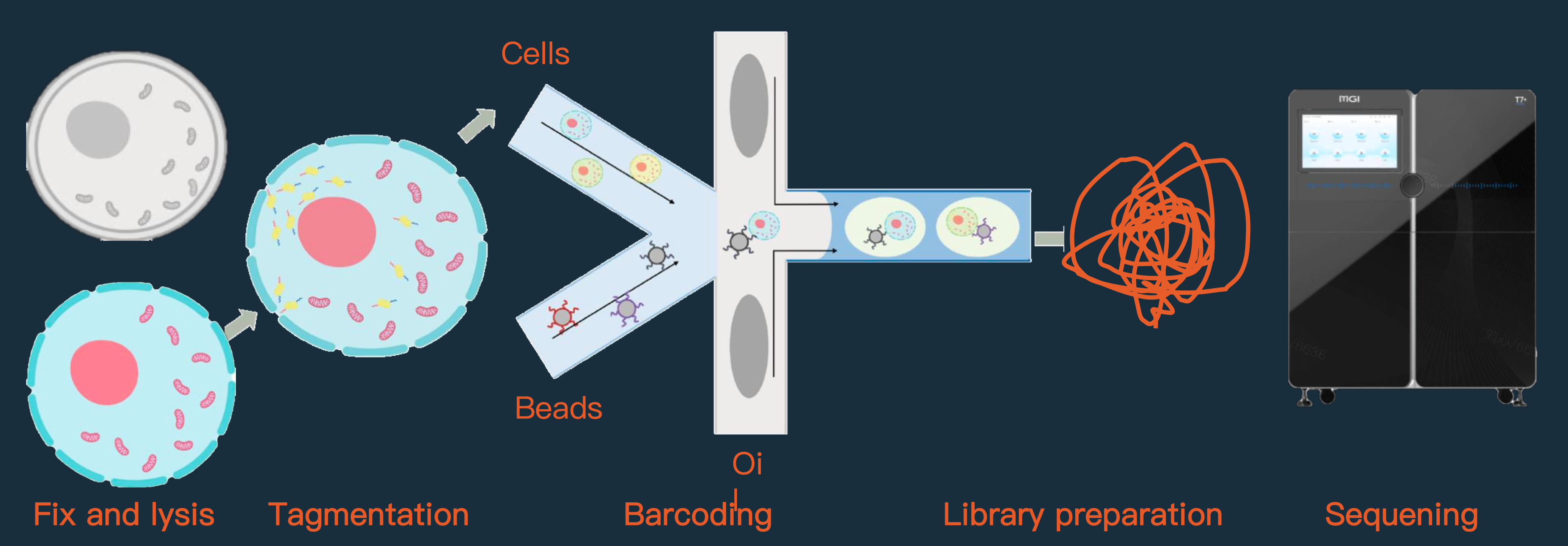 XinLab Technology Development Case: mtscATAC-seq method (Liu et al., Aging Cell, 2024).
In addition to innovations in technology and analytical methods, XinLab is actively engaged in several specialized omics research areas. Among these, plant genomics research remains the primary focus, encompassing the construction of plant reference genomes, studies on genome evolution, crop population genomics analysis, investigations into the genomic basis of essential traits, plant single-cell studies, and the molecular basis of key biological processes.
For instance, in the case of chickpea (Cicer arietinum L.), XinLab has collaborated on a series of studies ranging from reference genome construction and population genomics analysis to association studies of important agronomic traits and germplasm bank genome analysis. These efforts continue to drive the application of omics research findings in breeding practices, bridging research with practical outcomes.
 Chickpea genome research project: From Basic Research to Applied Practice.
Beyond plant genomics, XinLab has also expanded its scope to include animal and human research through collaborative projects. These initiatives leverage omics approaches to address specific biological questions, further broadening the lab’s impact across multiple domains.