Chromosome-Level Genome Assembly of Spotted Sea Bass
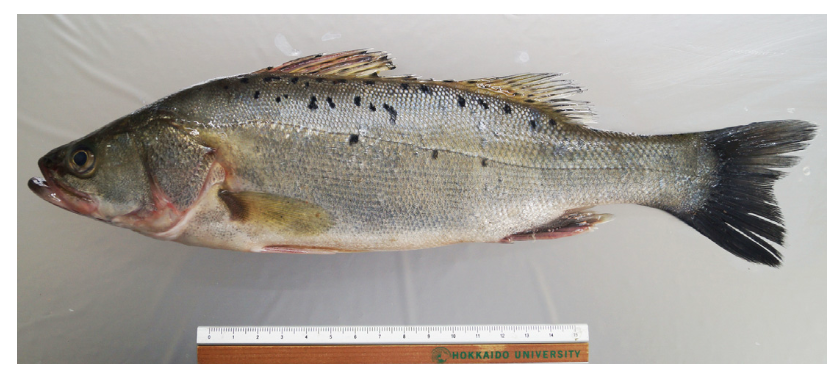
The spotted sea bass (Lateolabrax maculatus) is a commercially valuable fish widely cultivated in China. Despite its importance in aquaculture, genetic studies of this species have been limited, and a high-quality reference genome has been lacking. In our latest study, published in GigaScience, we present the first chromosome-level genome assembly for spotted sea bass, providing critical insights into genome structure, evolutionary adaptations, and breeding potential.
Key Findings
- High-Quality Genome Assembly:
- The assembled genome spans 668 Mb, with contig N50 of 31 kb and scaffold N50 of 1.04 Mb.
- Hi-C scaffolding enabled the construction of 24 pseudochromosomes, covering 77.68% of the assembled sequences.
- Phylogenetic Analysis and Evolutionary Insights:
- Using 1,586 single-copy gene families, we reconstructed a phylogenetic tree confirming that spotted sea bass is most closely related to European sea bass (Dicentrarchus labrax), with a divergence time of approximately 87.6 million years ago.
- We identified 125 unique gene families in spotted sea bass, highlighting lineage-specific genomic adaptations.
- Repeat Elements and Gene Annotation:
- A total of 132.38 Mb repeat sequences, comprising 20.73% of the genome, were annotated, with transposable elements making up 17.27% of the genome.
- We identified 22,015 protein-coding genes, with 96.52% showing homology to known databases, reinforcing genome completeness and accuracy.
- Functional Insights for Aquaculture Improvement:
- Comparative analysis pinpointed genes linked to osmoregulation, facilitating the species’ ability to thrive in diverse salinity conditions.
- The genomic data provides valuable resources for genome-wide association studies (GWAS) and marker-assisted breeding, supporting improved economic traits in spotted sea bass aquaculture.
Reflections
After establishing our Qingdao research branch, we collaborated with Professor Changwei Shao and Professor Songlin Chen at the Yellow Sea Fisheries Research Institute to conduct this spotted sea bass genome sequencing project. Our team focused on sequencing and data analysis, leveraging advanced genomic technologies to ensure high-quality assembly.
This study represents an important milestone in marine genomics research, providing genetic resources for population genetics, evolutionary studies, and molecular breeding. By integrating genome sequencing with applied aquaculture research, we aim to support sustainable fisheries and improve breeding efficiency for commercially valuable marine species.
The full text of this study can be accessed online at GigaScience.