Exploring the Commensal Microbiome of the Sperm Whale
The commensal microbiota of marine mammals plays a crucial role in their health and adaptation to the oceanic environment. However, due to the challenges of sample collection, little is known about the microbial communities associated with the sperm whale (Physeter catodon). In our latest study, published in PeerJ, we present the first metagenomic survey of the sperm whale commensal microbiome, investigating blood, muscle, and fecal samples from a stranded individual.
Key Findings
- Diversity and Composition of the Microbiome:
- Metagenomic sequencing revealed significant differences in microbial richness and abundance across the three sampled tissues.
- The gut microbiota of the sperm whale exhibited similarities to other cetaceans, suggesting co-evolution with its host.
- Detection of Potential Pathogenic Microorganisms:
- The study identified bacterial taxa such as Enterococcus faecium, Fusobacterium nucleatum, Pseudomonas aeruginosa, and various Streptococcus species, which have been linked to infections.
- Toxigenic Clostridium species were detected, including Clostridium novyi and Clostridium botulinum, known for their virulent properties.
- Insights into Marine Mammal Health Monitoring:
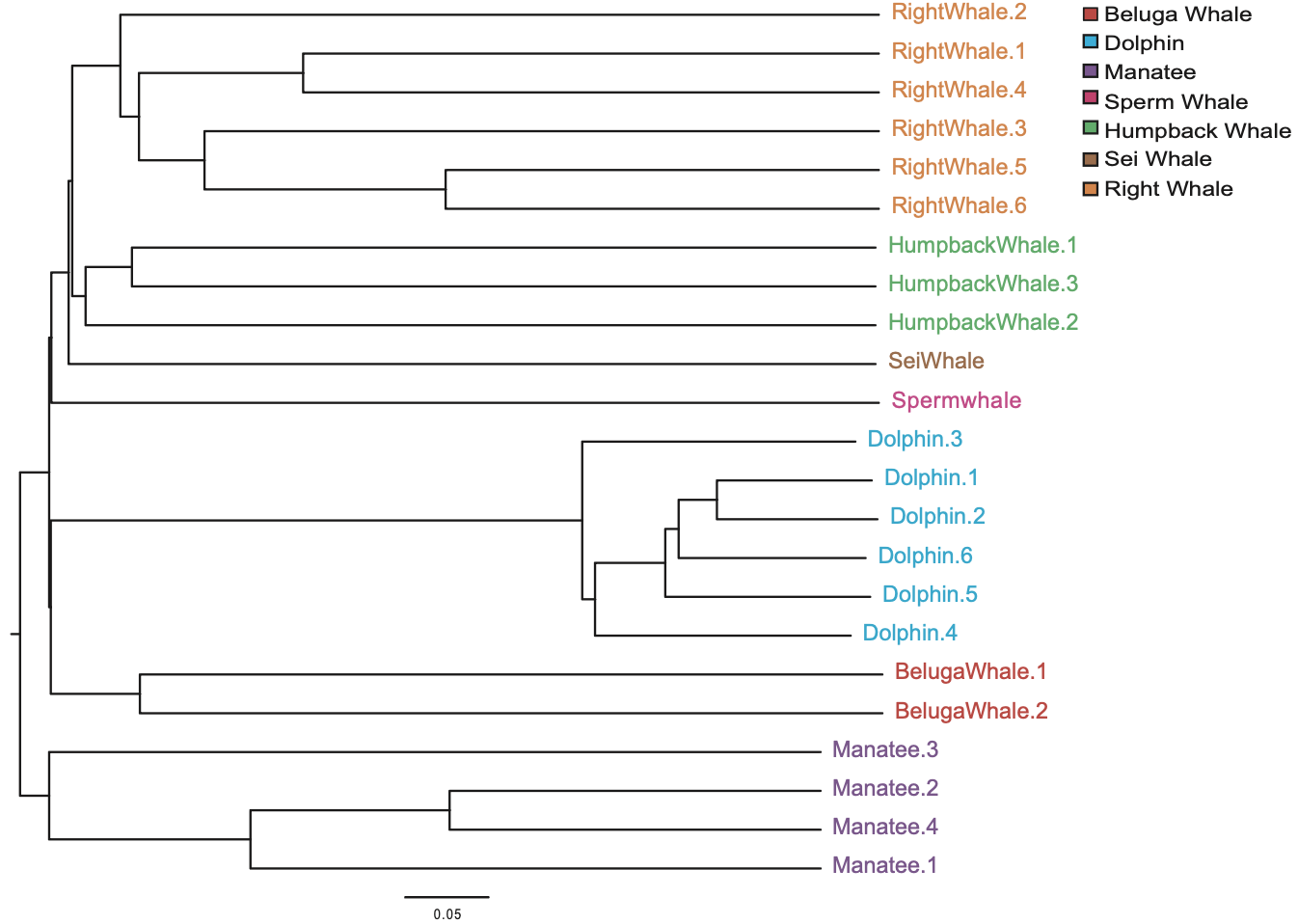
- By comparing the gut microbiome of sperm whales to other cetaceans, we demonstrated distinct microbial clustering that aligns with host phylogeny.
- The findings provide a valuable foundation for pathogen detection and health assessment, contributing to conservation efforts for marine mammals.
Reflections
By leveraging advanced sequencing technologies, we successfully conducted metagenomic profiling to understand the microbial landscape of sperm whales. Looking ahead, refining genome assembly techniques and microbiome analysis will enhance our ability to monitor marine mammal health, providing a genomic framework for conservation biology.
The full text of this study can be accessed online at PeerJ.