Genomes of Early-Diverging Streptophyte Algae Shed Light on Plant Terrestrialization
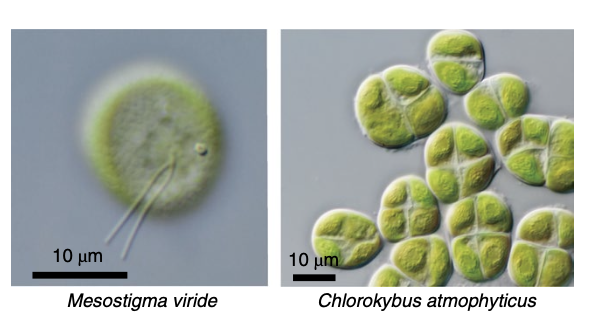
The transition of plants from aquatic to terrestrial environments represents a pivotal moment in evolutionary history. While land plants (embryophytes) are well studied, their closest algal relatives—the streptophyte algae—provide crucial insights into this transformation. In our latest study, published in Nature Plants, we present the genome assemblies of Mesostigma viride and Chlorokybus atmophyticus, two of the earliest-diverging streptophyte algae. These genomes offer a unique perspective on how ancestral plants adapted to subaerial environments before the emergence of land plants.
Key Findings
-
Genomic Traits Linked to Terrestrial Adaptation:
Comparative genomics revealed that the common ancestor of streptophytes already possessed genetic features suited for terrestrial environments. These include phytochrome-based light sensing, embryophyte-like photorespiration, stress-response transcription factors, and cellulose synthesis pathways that are typical of land plants. -
Divergent Genome Evolution in Freshwater vs. Terrestrial Algae:
Mesostigma viride, a freshwater alga, shows evidence of genomic streamlining, including the loss of certain terrestrial-adaptation genes. Meanwhile, Chlorokybus atmophyticus, which thrives in subaerial environments, retained key genetic elements for survival in harsh terrestrial conditions. -
Functional Insights from Phytohormones and Transcription Factors:
The genomes highlight early gains in plant hormone signaling components such as cytokinin and abscisic acid (ABA), which are crucial for stress adaptation. Importantly, multiple transcription factor families involved in environmental responses also originated in early streptophytes.
Reflections
In 2017, we launched the 10,000 Plant Genomes Project (10KP), aiming to sequence representative species across major plant branches, with a particular focus on reference genome assembly and comparative analysis. Algae hold an important place in this initiative, and our team collaborated with Professor Michael Melkonian from the University of Cologne to investigate significant algal genomes. This research represents one of our major achievements in the study of plant evolution.
Personally, I find algae fascinating—not just because they offer insights into terrestrial adaptation, but because they bridge evolutionary gaps in plant biology. Our team member Sibo Wang made crucial contributions to this project, helping drive forward data analysis and genome assembly. As we continue expanding the genomic landscape of algae, I am excited about the possibilities of unlocking further evolutionary mysteries that link aquatic ancestors to terrestrial plants.
The full text of this study can be accessed online at Nature Plants.